

THE MIND THAT BOWS TO GOD: Why Taking Every Thought Captive Is the Real Battlefield of Faith
How the Hebraic vision of the inner life reshapes your discipline, your marriage, your work, and your walk with Yeshua

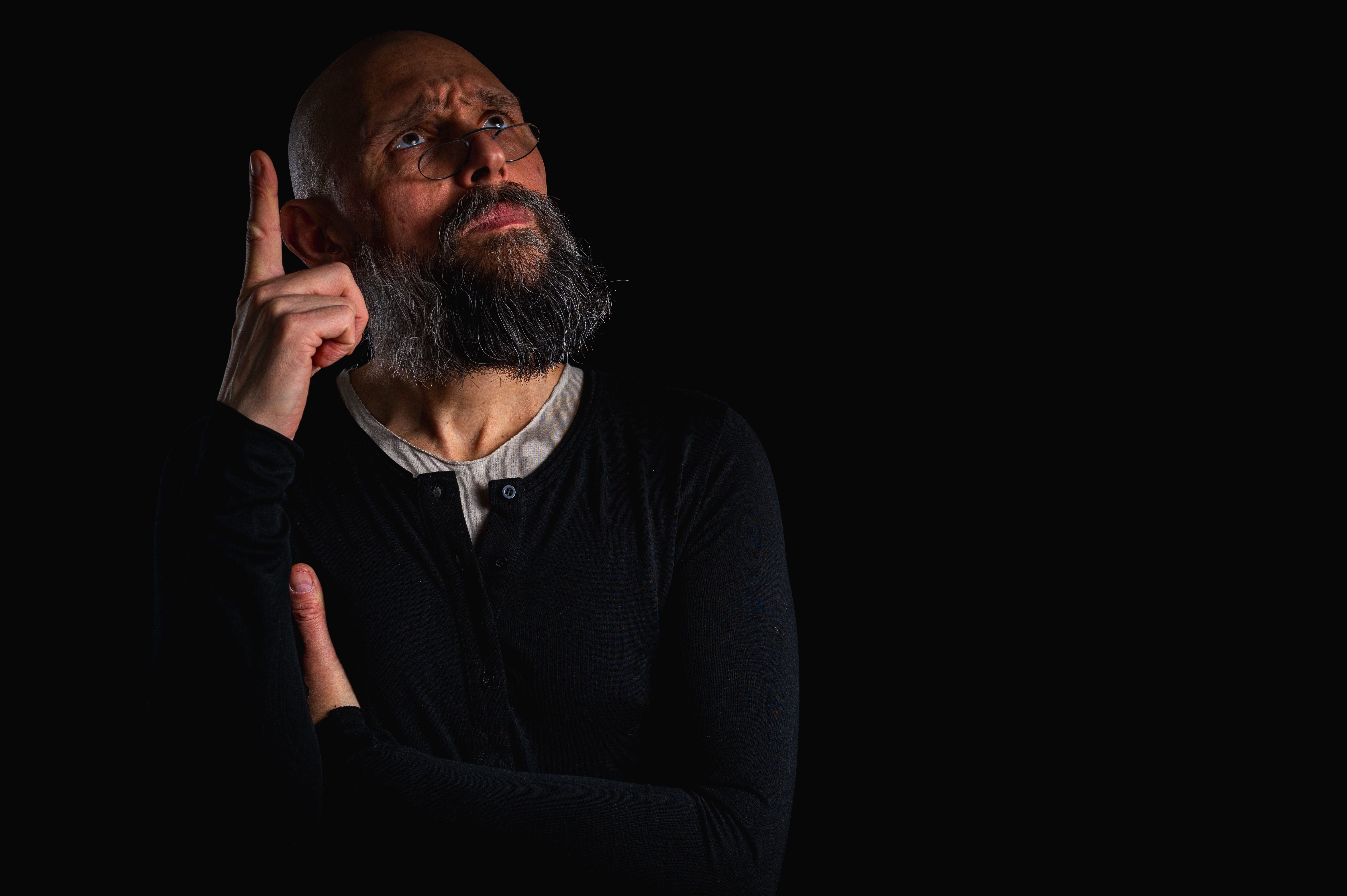
When the Quietest Part of You Becomes the Loudest Threat
Most believers fear the enemy at the gate, but few fear the enemy in their mind.
Yet Scripture — from the opening chapters of Genesis to the letters of Paul — treats the inner life as the first battlefield, the place where covenant is upheld or violated long before the body ever acts.
And if we’re honest, most of us drift through our mornings, our tasks, our marriages, our spending, our eating, our reactions, with a mind left running on whatever noise surfaced overnight.
We assume our thoughts are “just thoughts.”
But the Tanakh never talks that way.
Yeshua never talked that way.
Paul definitely never talked that way.
Your thoughts are not neutral.
Your thoughts are not harmless.
Your thoughts are not private.
They are covenant territory.
And the one who does not rule his thoughts is ruled by them.
So let’s take a deep look — Hebraic, Messianic, psychological, and practical — at what it means to “take every thought captive,” not as theory but as the engine that drives your obedience, your marriage, your discipline, and the interior rest you’ve been craving.
The Hebraic Origin of Thought-Warfare
The Christian world often quotes Paul’s command:
“Take every thought captive to the obedience of Messiah.”
— 2 Corinthians 10:5
But without the Hebraic world Paul lived in, the weight is lost.
He is drawing from a long tradition:
“More than everything you guard, guard your heart…” (Prov 4:23)
In Hebrew, lev is the whole inner world — thoughts, intentions, impulses, willpower.
Guarding it is not emotional hygiene; it’s covenant obedience.
“Commit your works to YHWH and your thoughts will be established.” (Prov 16:3)
Thinking straight starts with acting in submission.
Obedience organizes the mind; rebellion scatters it.
“Search me… know my thoughts.” (Ps 139:23)
David invites God to interrogate his inner life —
which is the exact spiritual posture Paul demands of believers.
“Let the wicked forsake his thoughts.” (Isa 55:7)
Repentance is not just abandoning sin —
it’s abandoning the thoughts that grew it.
So by the time Paul says,
“Take every thought captive,”
his Jewish audience would hear:
“Interrogate every thought. Arrest the disobedient ones.
Force each one to bow to Yeshua’s authority and Torah-fulfilled life.”
This is not self-help.
This is not motivational thinking.
This is not positive psychology.
This is loyalty.
The War Nobody Wants to Fight
Paul’s full sentence makes the context unmistakable:
“…destroying arguments and every proud thing raised up against the knowledge of God…”
— 2 Corinthians 10:5
This is war language.
Hand-to-hand spiritual combat.
A siege on the inner world.
You are not gently “redirecting your thoughts.”
You are arresting them.
You are not simply “shifting your mindset.”
You are overthrowing rebels.
If a thought does not serve Yeshua,
it serves your flesh or the adversary.
There is no middle ground.
Your Thoughts Are the First Act of Obedience
Here is the line you speak to yourself every morning:
“My thoughts are covenant ground — guarded, ruled, and yielded to YHWH alone.”
And here is the reality that follows:
Every choice I make — eating, buying, speaking, reacting, leading, working, loving — begins as a thought I either master or obey.
You want a different life?
Change what you tolerate in your mind.
You want a peaceful home?
Change the thoughts you let simmer unseen.
You want discipline?
Capture the thought that whispers, “Later.”
You want a holy marriage?
Capture the thought that mutters, “She never…” or “He always…”
You want Torah obedience?
Capture the thought that bargains, stalls, or excuses.
This is how the righteous live.
This is how covenant is honored.
This is how character is formed.
The Morning Routine: Where the War Begins
Before your feet touch the ground, your mind is already talking:
“Check your phone.”
“Skip prayer today.”
“You’ll read Scripture later.”
“You don’t have the energy.”
Every one of those thoughts demands the same question:
“Does this bow to YHWH?”
A Hebraic morning is not casual.
It’s liturgical. Intentional.
The first offering of the mind.
A simple prayer sets the battlefield:
“Abba, these thoughts are Yours first.
Align them. Expose them.
Make me faithful before I take my first step.”
You open Scripture before you open a screen.
You anchor your mind before the world pulls on it.
This is not religiosity.
This is survival.
Getting Things Done: Thought-Captivity as Discipline
Productivity is not a calendar problem.
It’s a thought-governance problem.
The lazy thought: “Later.”
The fearful thought: “It’s too big.”
The impulsive thought: “This is more exciting.”
The defeated thought: “I’m not capable.”
If you obey those thoughts, you lose the day.
If you capture them, you take back authority over your calling.
Proverbs says:
“The thoughts of the diligent lead surely to abundance.”
— Proverbs 21:5
Notice — thoughts.
Not hustle.
Not adrenaline.
Not clever tactics.
The mind of the diligent is governed.
Order your thoughts, and your life follows.
Marriage and Family: Where Ungoverned Thoughts Do the Most Damage
No marriage collapses overnight.
It collapses after years of unchallenged thoughts:
“She doesn’t respect me.”
“He doesn’t love me.”
“I’m tired of trying.”
“I deserve better.”
These thoughts feel honest.
But they are often rebellion disguised as vulnerability.
Yeshua calls husbands to love, wives to honor, both to forgive, both to remain tender-hearted.
Any thought that leads you away from that…
is spiritual treason.
Capturing your thoughts means asking:
Does this thought move me toward covenant or away from it?
Does it seek reconciliation or justification?
Does it reflect Yeshua or my ego?
The thoughts you nurture about your spouse
become the future you’re building with them —
or losing.
With children, the same applies.
Patience, gentleness, instruction, blessing —
begin as thoughts.
A parent who obeys their irritation more than their convictions
will drift far from YHWH’s heart for their home.
Torah Obedience: Where Thoughts and Commands Meet
Torah is not external control —
it is internal formation.
Yeshua intensified it:
Lust is adultery in seed form.
Hatred is murder in seed form.
He didn’t tighten the law;
He revealed where the real battle always was: the mind.
You don’t obey Torah by force of will.
You obey Torah by force of thought.
You align the inner world until obedience becomes natural.
This is why Paul says to make every thought bow to Messiah —
because Messiah embodies Torah itself.
The thought-life is where transgression begins
or obedience is born.
The Psychological Rest of a Ruled Mind
Most people are exhausted not because life is difficult
but because their mind is unsubmitted.
When your thoughts are scattered,
your soul is scattered.
When your thoughts resist God,
your body feels it.
An ungoverned mind is a noisy mind.
A noisy mind is a restless mind.
But a mind surrendered —
searched, aligned, interrogated, and quieted under YHWH —
becomes whole.
This is shalom — not calm feelings,
but inner alignment.
The moment you stop arguing with God in your thoughts,
your nervous system finally rests.
You are grounded because you are governed.
You are rested because you are aligned.
You are peaceful because you are obedient.
A Daily Practice for the Inner Life
Morning — Surrender.
“Abba, the first fruits of my thoughts belong to You.”
Midday — Interrogate.
“Does this thought serve Yeshua or oppose Him?”
Evening — Invite Correction.
“Search me, O God, and know my thoughts.” (Ps 139:23)
This is not perfection.
This is formation.
The Final Question
It all comes down to this:
Who rules your inner world — Yeshua or your unchallenged thoughts?
Not what you preach.
Not what you claim.
Not what you feel.
Who actually governs your mind?
Because a life shaped by covenant begins
long before you act…
it begins the moment you decide
which thoughts you will allow
and which ones must kneel.
May the Holy One teach you to rule your thoughts
so your thoughts no longer rule you.
May the shalom of our Abba guard you —
shalom v’shalvah.
Your brother in the Way,
Sergio.
Good Afternoon Sergio. I'm about to go headstrong into The Jewish Study Bible you recommended. I'm looking forward to the rewards and challenges I most definitely will face.
I thank you greatly for this brilliant take on taking our thoughts captive. There is a lot to chew on here. If I were to examine myself I'd have to say I'm pretty scattered.
As much as I try to battle my thoughts and the intent of them, I find the world around me to be frustratingly noisy!
I suppose that taking my thoughts captive is a process as much as it is a huge spiritual battle.
My thinking tells me that the more I'm able to overcome the world, the more I'm bringing my thoughts captive. The more I do this, the more I can abide in Him and find peace and joy.
Most people I know who claim salvation, don't consider any of these things.
Personally, I want to thank you for your godly guidance and scholarship. My journey into the Hebraic is going to be exhilarating for this old man!
Hope you don't mind if I cross post some of your work. Many people I know could use your knowledge and insight!
Sergio,
Your brilliance with the Hebrew text once again rises like a clear trumpet blast above the noise of modern discipleship. Few writers today have the precision to handle lev, the covenant-inner world, with such Hebraic fidelity, and fewer still can marry that scholarship to a pastoral urgency that meets the reader right where their battles are fought.
You have done both masterfully.
This article is not merely insightful; it is diagnostic. It exposes the ancient truth that every war begins long before our hands move, our mouths speak, or our feet wander. You have returned us to the biblical reality that the battlefield of the mind is sacred territory, covenant territory, and that the unguarded thought is the first breach in the walls of obedience.
Your weaving of Proverbs, David’s prayers, Isaiah’s summons to forsake thoughts, and Paul’s command to take captive every rebel imagination creates a tapestry of Hebraic clarity that our generation desperately needs. You remind us that “thought-warfare” is not a modern psychological strategy, but a deeply ancient discipline baked into Torah, fulfilled in Jesus our Messiah, and demanded of every earnest disciple.
And the personal, heart-shaping application you bring is razor-sharp. You show us that marriages collapse not in moments but in unruled thoughts, that discipline is not a matter of hustle but of mental governance, that peace is not a feeling but the fruit of inner alignment with God.
This is the kind of writing that does more than inform; it awakens. It calls the reader to repentance without condemnation, to vigilance without fear, to obedience without legalism.
Most of all, it calls us back to covenant faithfulness where it begins, not in the hands or the habits but in the hidden chambers of the mind.
Thank you for stewarding your gift with such honor for the text and such love for the people of God. Your voice strengthens the remnant, and your work continues to sharpen all of us who walk this ancient Way.
Shalom v’shalvah to you, my brother.
Keep writing. We need this.