

Unpacking #9: Satan, Hell, and the Fan Fiction Problem
How fear replaced covenant, imagination replaced Scripture, and religion learned to rule by terror

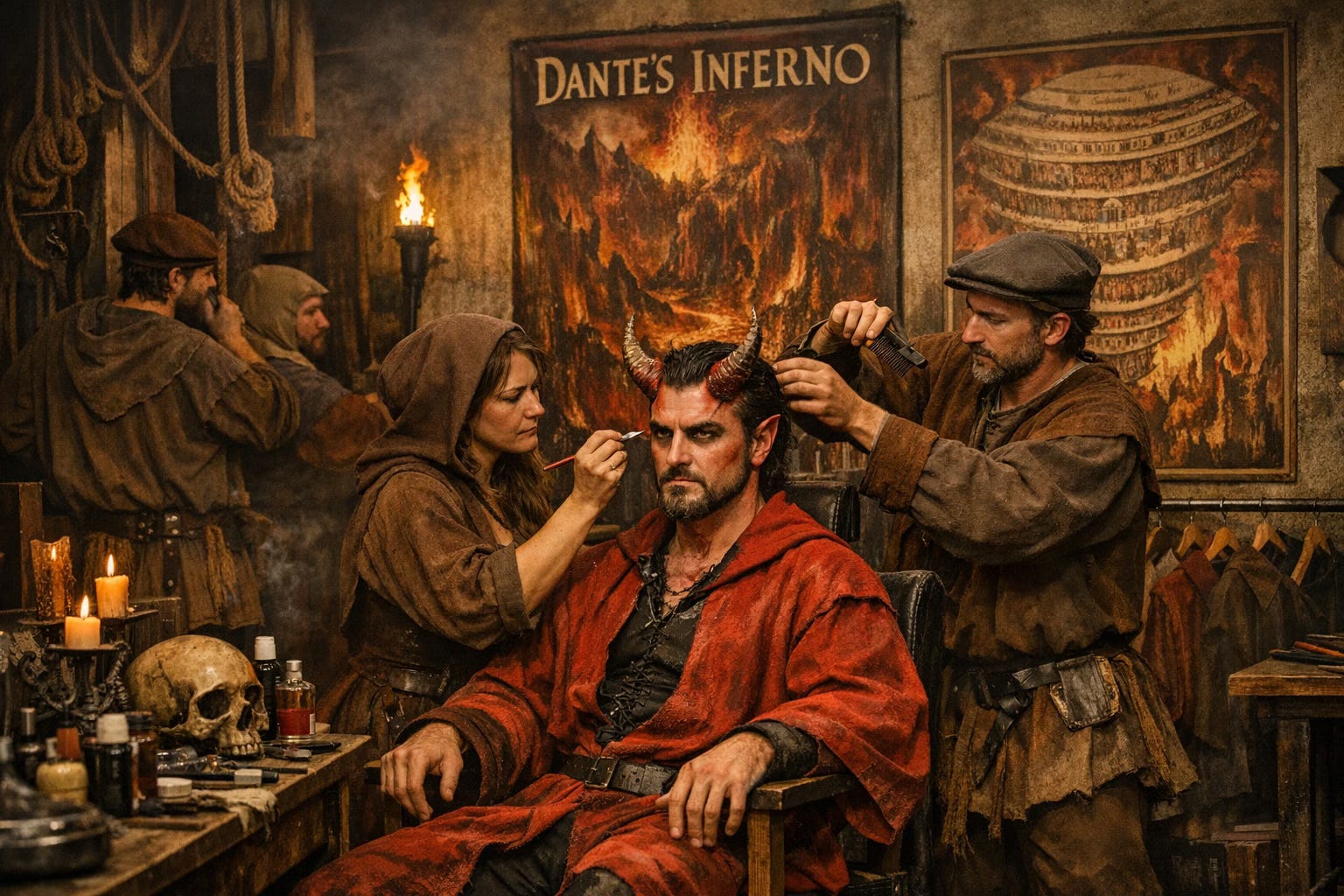
When you hear the words Satan or hell, what do you actually see?
Most people don’t picture a Hebrew word or a biblical category.
They picture a scene.
Fire.
Depth.
A dark ruler below.
Endless punishment loops.
A place you’re warned about far more than you’re actually taught from.
Now ask the harder question:
When did you learn that picture?
Was it from slowly reading Moses and the Prophets, letting the text set its own limits?
Or was it absorbed through sermons, artwork, revival imagery, movies, and church culture long before you ever examined the words themselves?
That question matters — because Scripture and imagination do not form people the same way.
And when imagination quietly replaces Scripture, power always moves in.
The Bible Is Restrained — On Purpose
If you read the Hebrew Scriptures the way they want to be read, something becomes obvious fast: they are not trying to satisfy your curiosity. They are trying to form your life.
Deuteronomy doesn’t give Israel metaphysical diagrams. It gives Israel covenant. It gives them a way to walk, a way to love God, a way to order their homes, a way to treat neighbor, a way to worship — without turning worship into control.
Then Moses draws a line that most modern theology quietly crosses:
“The secret things belong to Yahweh our God, but the things revealed belong to us and to our children forever, that we may do all the words of this Torah.” (Deut 29:29)
That’s the key: that we may do.
The “revealed” is not given for fantasy or fear. It’s given for obedience. For covenant alignment. For real life.
And if you sit in the prophets long enough, you realize they don’t preach “escape.”
They preach return.
They confront idolatry, oppression, hypocrisy, and covenant betrayal — and they call the people back.
So when Scripture is restrained on a subject, it’s not because it’s timid.
It’s because it refuses to let curiosity replace repentance.
Institutions don’t love restraint.
They love leverage.
Fan Fiction as Theology
Fan fiction happens when someone loves a story — and adds to it anyway.
That’s exactly what happened with hell theology.
Scripture gives warnings. Tradition gives pictures. And once pictures exist, they bypass your reasoning and lodge straight into instinct. They form a person before the text gets a chance.
That’s why Torah warns:
“You shall not add to the word that I command you, nor take from it.” (Deut 4:2)
Torah is saying: don’t build an extra reality around My words. Don’t construct an atmosphere I didn’t reveal. Don’t turn covenant into mythology.
Because additions don’t just add “details.”
They add force.
They add fear.
They add a system.
And once a system exists, it starts discipling people more than Scripture does.
The Hebraic Worldview the Church Drifted From
Before we define Satan or “hell,” we have to recover the worldview Scripture assumes — because many modern readers import Greek dualism into a Hebraic text.
Scripture is not two equal forces battling forever.
“See now that I, even I, am He… I kill and I make alive… there is no god beside Me.” (Deut 32:39)
That statement isn’t philosophical. It’s covenantal. It tells you who has ultimate agency in reality: Yahweh alone.
In the Hebrew frame:
Evil is real — but not co-sovereign.
Rebellion exists — but not eternal.
Judgment is real — but not chaotic.
Once you adopt a dualistic imagination, fear becomes permanent. You start needing mediators. You start needing “covering.” You start needing a system to keep you safe.
That’s not covenant life.
That’s institutional dependency.
Satan in the Text: Adversary, Not Anti-God
The word śāṭān means adversary or accuser. It functions as a role-word before it’s treated like a personal name.
Read the passages slowly and the mythology evaporates.
Job 1–2: not a king — a courtroom adversary
Job opens with the “sons of God” presenting themselves before Yahweh. The satan is there too. Not a fiery underworld. Not a throne of darkness. A court scene.
He accuses. He challenges Job’s integrity. He presses a test.
And Yahweh remains Yahweh — sovereign, setting limits, permitting, restraining.
That alone dismantles the “anti-god” narrative.
Zechariah 3: accusation rebuked
Joshua stands before Yahweh. Satan stands at his right hand “to accuse.” Yahweh rebukes the accuser. Then God cleanses, clothes, restores.
That’s the pattern: accusation vs restoration.
Revelation 12: the title is explicit
John calls him:
“the accuser of our brothers.” (Rev 12:10)
Satan accuses.
God judges.
And accusation becomes dangerous when it turns into a religious habit.
When Yeshua called Peter “Satan”
Peter confesses Messiah. Then when Messiah speaks of suffering, Peter rebukes Him. Yeshua responds:
“Get behind Me, Satan… you are not setting your mind on the things of God, but on the things of man.” (Matt 16:23)
No exorcism. No possession language.
Yeshua names a function: Peter is acting as an adversary to the Father’s will because his thinking is shaped by human expectation, not covenant purpose.
Sometimes “satan” isn’t a horned being.
Sometimes it’s sincere religious reasoning resisting God.
Satan Does Not Rule Hell
The Bible never depicts Satan ruling a punishment realm. Not once.
Instead, he is:
cast down (Luke 10:18)
restrained (Rev 20:1–3)
finally judged and destroyed (Rev 20:10)
And Yeshua is explicit:
“The eternal fire prepared for the devil and his angels.” (Matt 25:41)
Prepared for him — not ruled by him.
A ruler is not punished in his own kingdom.
The image of Satan ruling hell is mythology — and mythology is useful when fear needs a face.
“Hell” Is an English Collapse — and Collapse Creates Power
One of the most controlling moves in popular teaching was collapsing multiple biblical categories into one English word: hell.
That word often stands in for:
Sheol
Hades
Gehenna
Lake of Fire
But those are not interchangeable. They don’t function the same way in the text.
When distinctions collapse into a single undefined terror, fear becomes easier to wield.
And undefined fear is power.
Sheol and Hades: Mortality Without Horror Tourism
Sheol is the grave realm. The text doesn’t build torture mechanics.
Ecclesiastes is blunt:
“There is no work or thought or knowledge or wisdom in Sheol.” (Eccl 9:10)
That’s not a Dante map. That’s a moral punch: you are mortal — live wisely now.
Acts 2 uses Hades in continuity with Sheol (Acts 2:27). Revelation goes further:
“Death and Hades were thrown into the lake of fire.” (Rev 20:14)
Death ends.
If death ends, the fear economy collapses with it.
Gehenna: Prophetic Warning With an Address
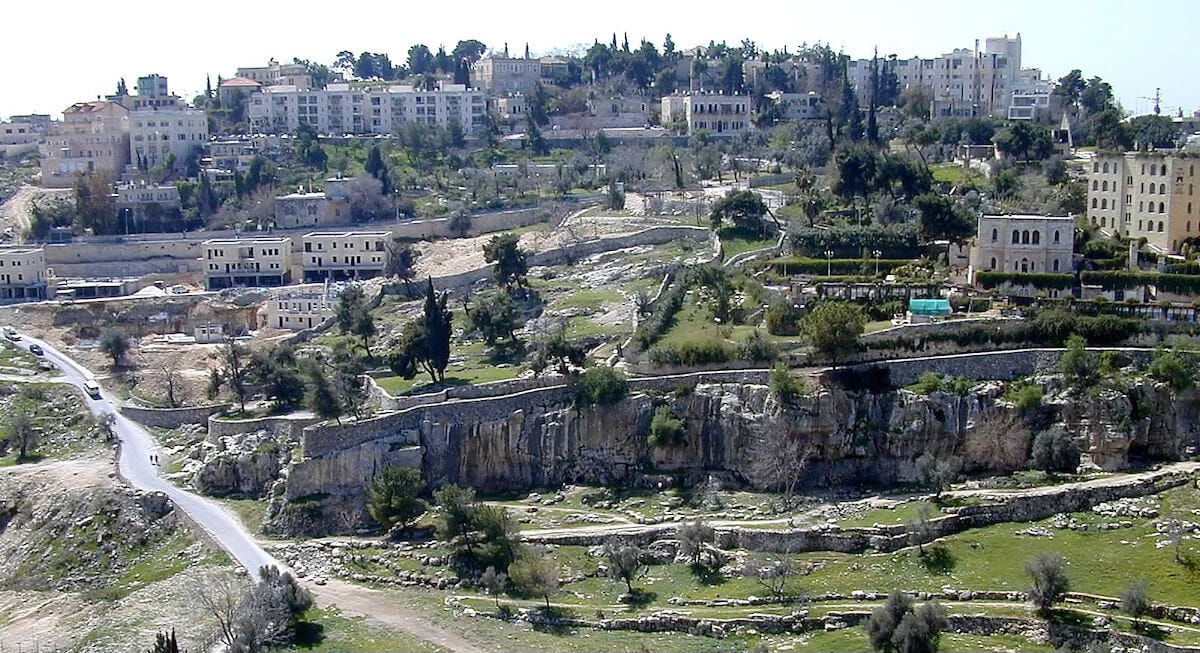
Gehenna is the Valley of Hinnom — a real place loaded with prophetic meaning (Jer 7; Jer 19).
Yeshua uses it most sharply toward leaders and hypocrisy (Matt 23). It’s covenant warning language aimed at injustice, abuse, and religious theater.
Religion redirected it toward the masses — because masses are easier to manage with fear than leaders are.
Weeping and Gnashing (Grinding) of Teeth: Grief, Rage, and the Collapse of Presumption
“There will be weeping and gnashing of teeth.”
Most people hear that and imagine eternal torture.
But that picture doesn’t come from Scripture.
It comes from importing medieval imagination into a Jewish idiom.
In the Tanakh, gnashing teeth describes rage, not pain:
“The wicked plots… and gnashes his teeth.” (Ps 37:12)
“They gnash their teeth at me.” (Ps 35:16)
“The wicked sees it and is angry… he gnashes his teeth.” (Ps 112:10)
The gnashing comes from within.
When Yeshua uses the phrase, it’s tied to exclusion and reversal:
“You will see Abraham… and you yourselves cast out.” (Luke 13:28)
The weeping is grief.
The gnashing is fury.
Not because God is torturing them —
but because their story about themselves collapsed.
Parables deliver shock, not geography.
Fear-based religion stripped this phrase from context and turned it into a torture soundtrack.
Scripture offers something more sobering:
When truth arrives, some people do not repent.
They rage.
The Lake of Fire: Final Judgment, Not Threat Theater
By the time the Lake of Fire appears, we are already at the end of the story.
Revelation places it at the conclusion — not the center — of Scripture.
“The devil… was thrown into the lake of fire.” (Rev 20:10)
“Death and Hades were thrown into the lake of fire.” (Rev 20:14)
That second line matters.
Death itself is destroyed.
If Death is thrown into the Lake of Fire, then the Lake of Fire is not ruled by death — it is where death ends.
Paul says the same thing:
“Then comes the end… after destroying every rule and authority and power.” (1 Cor 15:24)
“Eternal fire” describes the finality of God’s judgment — not an endlessly operating torture machine.
Scripture doesn’t linger there because it isn’t meant to be contemplated.
Fear systems linger there because fear requires rehearsal.
Revelation moves on:
“Behold, the dwelling place of God is with humanity.” (Rev 21:3)
“No longer will there be anything accursed.” (Rev 22:3)
Judgment is real.
But restoration is the point.
Jewish Restraint vs Medieval Imagination
The Hebrew Scriptures press justice, mercy, humility (Micah 6:8).
They call people to responsibility (Ezek 18).
They do not build metaphysical punishment maps.
Medieval imagination did.
That’s why Dante mattered.
Dante: When Art Became Doctrine
Dante gave the church:
circles
hierarchies
tailored punishments
a ruling Satan figure
a universe more vivid than Scripture
It was art.
It was powerful.
It was not revelation.
When imagination disciples the church, the Bible becomes a prop.
The Gospel Transaction Mutates
The biblical call is covenantal:
Return.
Be healed.
Walk.
Live.
Fear reshaped it into a transaction:
Fear → guilt → decision → relief.
“God’s kindness leads to repentance.” (Rom 2:4)
Fear can awaken conscience.
It cannot sustain covenant loyalty.
Fear Goes Mass-Market: Revivalism
Revivalism rewired Western Christianity.
It shifted faith from life-long formation to crisis moment.
From allegiance to decision.
From community to transaction.
Fear scales.
Covenant takes time.
Institutions chose what scales.
Religion as a Control System
Fear centralizes authority, discourages questions, and creates dependency.
Hell becomes leverage.
Satan becomes the threat.
The system becomes the shelter.
Once a system can label dissent as “Satan,” it doesn’t need truth — only authority.
If Someone Sins, Will They Burn Forever and Ever?
Scripture never says that.
Sin is covenant breach — not a trapdoor.
“If the wicked turns… he shall surely live.” (Ezek 18:21)
“The wages of sin is death.” (Rom 6:23)
Judgment is real. Evil ends.
But terror is not God’s tool.
Thinking Bigger Than the Apple
The Bible doesn’t begin with sin.
It begins with creation.
And it ends the same way — God dwelling with humanity.
“Behold, the dwelling place of God is with humanity.” (Rev 21:3)
The gospel isn’t sin management.
It’s restoration.
The Hard Question the Transaction Gospel Can’t Answer
If belief alone erases evil, what separates you from the most wicked person who “believes”?
The thief on the cross wasn’t exploiting a loophole.
He repented. He feared God. He acknowledged the King.
That’s covenant — even at the final hour.
The Mirror
Satan accuses.
Religion accuses.
God calls witnesses.
“You are My witnesses.” (Isa 43:10)
Which voice shaped you?
Final Word
Religion shrank the story to control people.
Scripture tells it whole:
Creation.
Rupture.
Judgment.
Restoration.
God dwelling with humanity again.
That is the gospel.
And at a final note — in all my articles, I’ve never had a Christian pastor challenge my logic.
I’m looking forward to that day.
May the shalom of our Abba guard you —
shalom v’shalvah.
Your brother in the Way,
Sergio

The section about collapsing Sheol, Hades, Gehenna, and the Lake of Fire into one flattened image was truly compelling. It emphasizes how easily language shapes fear without us realizing it. And your words on restoration is the point of the story, not fear rehearsal, resonated deeply. As a Catholic, I hold that judgment is real and serious, but I agree that the arc of Scripture moves toward God dwelling with humanity, not toward terror as the center of the gospel. I may not land in exactly the same place on every theological conclusion, but I’m grateful for the way you challenged inherited imagery and pushed readers back into the biblical text itself.
I usually read, but when they are longer, I listen. And this was a good listen! Thanks!