

When Man Made Theology Makes God Colder Than the Cross
How Matthew 5 Exposes the Lie That “God Doesn’t Really Love You”

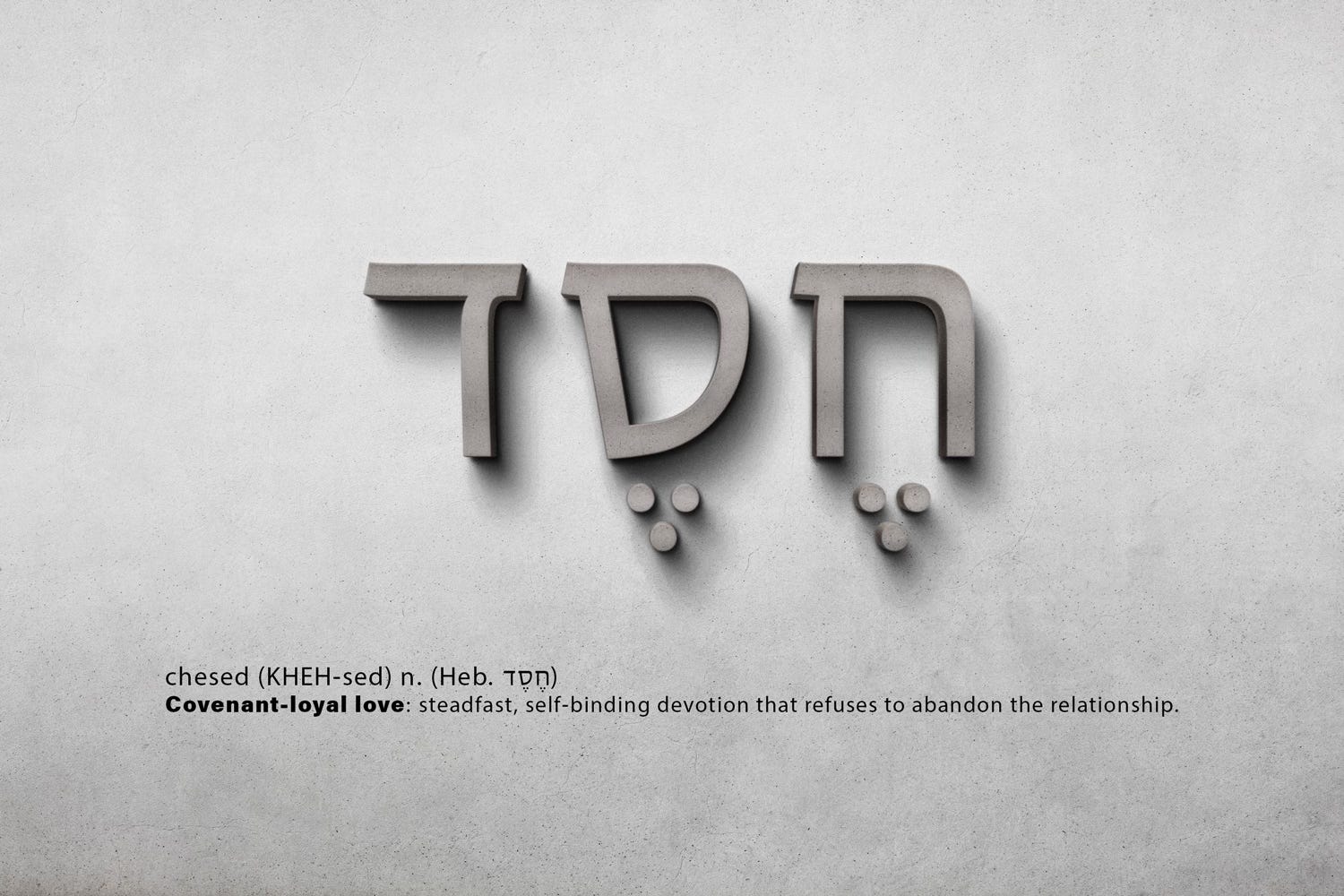
Let me start where a lot of people won’t.
You believe in God.
You believe in Yeshua.
And yet, somewhere deep inside, you’re almost certain He doesn’t really love you.
You’ve heard all the right phrases:
“God loves you.”
“God is love.”
“Jesus died for sinners.”
But you’ve also heard:
“God only truly loves the elect.”
“God’s attitude toward the wicked is only wrath.”
“God is neutral or hostile until you repent.”
So you do the quiet math in your own soul:
“If God only loves a small circle of ‘chosen’ people…
If His heart is basically anger toward the wicked…
If love only shows up after I repent…
Then I’m probably on the wrong side of that line.
I’m tolerated at best, watched at a distance, and loved only if I somehow become someone else.”
Nobody says that part out loud on Shabbat or Sunday.
But you feel it.
And the painful part is this: a lot of popular theology doesn’t heal that fear.
It confirms it — and then calls that confirmation “sound doctrine.”
Any system that makes God’s heart smaller than what Yeshua reveals is not “high theology.”
It’s just idolatry in religious language.
Matthew 5:43–48 quietly tears that idolatry apart.
Not with bumper-sticker slogans.
With the actual words of Israel’s Messiah, rooted in the Tanakh.
None of this cancels judgment.
None of this erases the reality that “it is appointed for man to die once, and after this the judgment,” and that one day every knee will bow and every tongue will confess Yeshua as Lord. This is not a soft God. This is a holy God whose love is as real as His justice.
What Yeshua Actually Says in Matthew 5
Listen carefully to the passage and notice what He ties it to:
“You have heard that it was said,
‘You shall love your neighbor and hate your enemy.’
But I say to you, love your enemies, bless those who curse you,
do good to those who hate you, and pray for those who spitefully use you and persecute you,
that you may be sons of your Father in heaven;
for He makes His sun rise on the evil and on the good,
and sends rain on the just and on the unjust.
For if you love those who love you, what reward have you?
Do not even the tax collectors do the same?
And if you greet your brethren only, what do you do more than others?
Do not even the tax collectors do so?
Therefore you shall be perfect, just as your Father in heaven is perfect.”
(Matthew 5:43–48)
Look at the flow.
Command: “Love your enemies…”
Purpose: “…that you may be sons of your Father in heaven…”
Explanation: “…for He makes His sun rise on the evil and on the good, and sends rain on the just and the unjust.”
Climax: “Therefore be perfect, just as your Father in heaven is perfect.”
Yeshua does not say:
“Love your enemies because God told you to do something He Himself would never do.”
He says:
“Love your enemies because this is what your Father is like — and you’re meant to resemble Him.”
The call to love enemies is not a test to see whether you can morally out-perform God.
It’s an invitation to share His way of being in the world.
If that’s true, then any theology that claims
“God does not love His enemies; He only loves His friends”
is in direct collision with Yeshua’s own words.
And notice: Yeshua doesn’t say enemy love replaces justice.
He says it reveals the Father. The same Father who loves enemies now is the One before whom every knee will bow later. Love now does not mean no accountability then — it means you’re resisting love when you resist Him.
The Tanakh: Same God, Same Heart
This isn’t “New Testament God 2.0.”
Yeshua is not revising the God of Israel.
He is interpreting Him.
The Tanakh has been telling this story the whole time:
Psalm 145:9 – “YHWH is good to all, and His tender mercies are over all His works.”
Ezekiel 18:23; 33:11 – He takes no pleasure in the death of the wicked, but calls them to turn and live.
Exodus 34:6–7 – God names Himself to Moshe:
“YHWH, YHWH God, merciful and gracious,
slow to anger, and abounding in steadfast love and faithfulness…”
And then there’s Jonah.
Jonah runs from his calling because he knows exactly who God is:
“I knew that You are a gracious and merciful God,
slow to anger and abundant in lovingkindness,
One who relents from doing harm.” (Jonah 4:2)
Jonah’s problem is not that God is too harsh.
Jonah’s problem is that God is too compassionate — even toward violent pagan Nineveh.
The book ends with God’s haunting question:
“Should I not pity Nineveh…?” (Jonah 4:11)
That’s the same God Yeshua calls “Father.”
So when Yeshua says, “Your Father makes His sun rise on the evil and the good,”
He is not unveiling a new personality.
He is exposing the heart that has been there all along.
The same God who pitied Nineveh
will one day judge the nations.
The same God who pleads, “Turn and live,”
will one day bring every secret thing into the light.
Love does not erase that day; it makes rejecting Him on this day far more serious.
The God of Sinai Is the God of the Cross
Let’s say this without fog, because theology has made this confusing for a lot of people:
The God who spoke from the fire at Sinai
is the God whose hands were pierced at Golgotha.
The One who thundered the commandments
is the One who hung on the execution stake.
There are not two different deities:
an “Old Testament God” of wrath and a “New Testament Jesus” of love.
There is one covenant God, revealed first in the Tanakh,
and then made visible in flesh and blood in Yeshua.
The split between “angry Father” and “nice Jesus” did not come from Moses, the prophets, or the apostles.
It came from later minds — shaped by Greek philosophy — trying to fit the God of Israel into categories He never asked for.
Under those categories:
“justice” and “love” get pulled apart,
holiness becomes cold distance instead of burning covenant faithfulness,
and the God of Abraham is quietly turned into a problem that Jesus needs to solve.
But the apostolic witness refuses that.
When you see Yeshua:
touching lepers,
weeping over Jerusalem,
warning of judgment,
teaching about Gehenna,
forgiving His executioners,
dying for His enemies,
you are not seeing a gentler, second God trying to calm down the first one.
You are seeing the God of Exodus 34 —
“merciful and gracious, slow to anger, abounding in steadfast love” —
walking into His own story.
Do not let later systems talk you out of this.
The face that bends over the cross is the same face that bent over Sinai,
the same heart that pitied Nineveh,
the same voice that cried through the prophets:
“Turn and live.”
The same God who will one day have every knee bowed before Him
is the God who now kneels to wash His disciples’ feet.
Same God.
Same covenant love.
Same holy fire — now visible in wounds.
Theologies That Shrink God’s Heart
Now we can talk plainly about the doctrines many of us were handed — doctrines that quietly whisper, “You are unloved,” even while singing about grace.
“God only truly loves the elect.”
The claim:
God has real, saving love only for the elect. Everyone else gets a temporary, surface-level “kindness” before eternal wrath. It’s not love; it’s just fuel for judgment.
But Yeshua’s logic in Matthew 5 clashes with that.
He tells us:
Love your enemies.
Do good to those who hate you.
Pray for those who persecute you.
Why?
“That you may be sons of your Father in heaven; for He makes His sun rise on the evil and on the good…”
In other words:
“Love your enemies because your Father is already doing good to His.”
If God’s true love is restricted to the elect, then:
You are commanded to love more generously than God does.
Your enemy love is morally higher than His.
Yeshua’s reasoning collapses, because you’re no longer imitating your Father — you’re surpassing Him.
The Tanakh pushes in the same direction:
“YHWH is good to all,
and His tender mercies are over all His works.” (Psalm 145:9)
You can cling to a system that says, “God only loves the elect,”
or you can take Matthew 5 and Psalm 145 as written.
You don’t get both.
And if you’re the one sitting there thinking,
“I’m probably not in the elect,”
hear this: the God Yeshua reveals is not stingy with His heart.
You are not an accidental outsider to His goodness.
Will everyone respond to that goodness? No.
But the refusal belongs to the human heart, not to a Father who never truly loved.
“God’s attitude toward the wicked is only wrath.”
The claim:
From beginning to end, God has nothing toward the wicked but wrath. No real love, no true pity — only anger.
Yeshua refuses that picture.
He explicitly names:
“the evil” and “the unjust”
and then states:
“He makes His sun rise… He sends rain…”
He doesn’t present this as an impersonal system.
He presents it as the pattern of the Father’s heart.
The Tanakh again agrees:
Exodus 34:6–7 – He leads with mercy and covenant love; judgment is there, but it is not the first word.
Ezekiel 18 & 33 – God pleading with the wicked: “Turn and live.”
Jonah 4 – God’s compassion for Nineveh is precisely what offends Jonah.
Wrath is real. Judgment is real.
Flattening God into “wrath only” doesn’t defend His holiness.
It distorts His Name.
And just because God loves His enemies does not mean it is safe to stay His enemy.
If anything, it makes staying there more tragic.
You will bow the knee — either now in repentance, or then in unavoidable acknowledgment. Love does not cancel that reality; it makes it urgent.
“The ‘Old Testament God’ is wrathful; the ‘New Testament God’ is loving.”
The claim:
The God of the Tanakh is harsh and tribal; the God in Yeshua is gentle and loving.
Matthew 5, read with the Tanakh, exposes that as biblical laziness.
The Father Yeshua describes:
is good to evil and unjust people,
gives sun and rain to those who ignore Him,
calls His children to mirror that same generosity toward their enemies.
That Father is the same God who:
reveals Himself to Moshe as merciful and gracious (Exodus 34),
is “good to all” in Psalm 145,
pleads with the wicked through Ezekiel,
pities Nineveh rather than rushing to wipe it out.
The One who thundered at Sinai is the One who was lifted up outside Jerusalem.
The blood on the doorposts in Egypt and the blood on the wood at Golgotha belong to the same covenant God.
The split between “Tanakh God” and “New Testament God” is not biblical revelation.
It’s the fallout of reading Scripture through Greek philosophical grids that split justice from love and holiness from tenderness.
Yeshua is not softening a brutal deity.
He is lifting the veil on the covenant God of Abraham, Isaac, and Jacob —
showing you the same heart you see in Exodus 34 and Jonah 4, now nailed to a Roman cross.
The day is still coming when He will judge the living and the dead.
Every tongue will confess.
We’re just deciding now whether we do that as sons and daughters or as rebels who resisted the very love that could have saved us.
“Enemy love is just our ethic, not God’s nature.”
The claim:
God commands us to love enemies, but He doesn’t actually love His. It’s just a difficult test of obedience.
Yeshua’s words say otherwise.
“Love your enemies… that you may be sons of your Father… for He makes His sun rise on the evil and on the good…”
We love enemies because that’s what our Father already does.
If enemy love doesn’t truly exist in God, then Matthew 5 becomes vicious:
“Do something God Himself refuses to do, so you can prove you belong to Him.”
That isn’t what Yeshua says.
He ties your ethical life directly to the Father’s character.
If your god doesn’t love his enemies,
you don’t have the God Yeshua is describing.
Again, this doesn’t mean there is no final separation between those who cling to darkness and those who cling to Him. It means that even that separation won’t be because God refused to love, but because people refused the love that confronted and called them.
“God’s perfection is strict justice, not overflowing love.”
The claim:
When God says, “Be perfect,” He mainly means flawless performance, strict compliance, and cold precision.
But the “therefore” in Matthew 5:48 matters:
“Therefore be perfect, just as your Father in heaven is perfect.”
Therefore what?
Therefore — in light of:
loving enemies,
blessing those who curse,
doing good to those who hate,
praying for persecutors,
mirroring God’s indiscriminate goodness with sun and rain.
In context, perfection isn’t:
“Never slip again or God is done with you.”
It’s:
“Grow into a heart that keeps doing good even toward those who oppose you — like your Father does.”
A “holy” God who is all sharp edges and no tenderness might feel powerful,
but He doesn’t look like the Father Yeshua just portrayed.
That kind of “holiness” is just human hardness with a halo painted on.
Biblical holiness is consuming fire and covenant faithfulness.
The same God who will judge the world in righteousness is the One who commands: “Love your enemies… be perfect as your Father is perfect.”
“God only loves you after you turn to Him.”
The claim:
Before you repent, God is neutral or hostile. Only after you turn does He start to love you.
Matthew 5 and Romans 5 stand against that.
Matthew 5:45 – God is already pouring sun and rain on evil and unjust people, long before they turn.
Romans 5:8–10 – “While we were still sinners… while we were enemies, we were reconciled to God through the death of His Son.”
The movement is not:
your repentance → God’s love.
It is:
God’s love → your repentance.
He doesn’t wait for you to become lovable and then decide you’re worth His effort.
You never become worth His effort.
He moves first because love is who He is, not who you are.
Responding matters.
Repentance matters.
Faithfulness matters.
There really is such a thing as rejecting Him to the end.
But when that happens, it won’t be because He never loved.
It will be because love was answered with refusal.
For the Ones Who Feel Completely Unworthy
Let’s talk straight.
Maybe your issue isn’t just, “Does God love everyone?”
Maybe it’s, “I know God can love people — I just don’t see how He could love me.”
You look at your story and it feels like a list of reasons why heaven should be done with you:
the affair,
the addiction,
the lies,
the rage,
the passivity that let damage keep happening,
the repeated, deliberate choices you knew were wrong.
You don’t just feel “sinful.”
You feel contaminated — like damaged goods in the back corner of a cosmic thrift store.
Every time someone says “God loves you,” something inside you answers:
“He loves the people who didn’t do what I did.
He loves the ones who didn’t break what I broke.
He loves the ones who feel clean when they pray.
I’m not in that group. I forfeited that a long time ago.”
Hear this clearly:
“Worthy” was never the basis.
You were never going to be loved because you finally became impressive enough, clean enough, or consistent enough.
The story of Scripture is not:
“The worthy are loved; the unworthy are discarded.”
The story is:
“No one is worthy.
And yet, this God sets His love on the unworthy,
binds Himself to them in covenant,
and pays the cost of their restoration Himself.”
Israel was not chosen because she was worthy.
Nineveh was not spared because they were worthy.
You are not sought because you are worthy.
You matter to Him because He decided you would,
because His image is on you,
because His heart moves toward enemies and failures and exiles and outcasts.
When Romans 5 says:
“While we were still sinners… while we were enemies…”
it is not describing a few bad moods.
It is describing absolute unworthiness —
and then saying, “That’s the place where Messiah died for you.”
So if your objection is, “I’m not worthy,”
heaven’s answer is, “Correct. That was never the point.”
The cross is not God finally deciding you made the cut.
The cross is God stepping into your unworthiness and refusing to let it have the last word.
And yes — one day you will bow the knee and confess Yeshua as Lord.
Better to do it now, as one who receives mercy and turns,
than to cling to your unworthiness as a shield and meet that same Lord as Judge.
We’ll talk about hell in another place, without the manipulative scare tactics that have twisted it.
For now, it’s enough to say this:
running from love does not end in safety.
What About Judgment, Hell, and God’s Hatred of Evil?
If you’re asking:
“Doesn’t God hate evil?”
“What about hell?”
“Isn’t this just universalism?”
Those are fair questions.
Does God hate evil?
Yes. Deeply.
He hates what destroys His creation, deforms His image-bearers, and violates His covenant.
But hatred of evil isn’t the same as absence of love for the person entangled in it.
A father can utterly despise the addiction strangling his child,
and still be the one who loves that child most fiercely.
What about judgment and hell?
Judgment is real.
The Scriptures don’t flinch from it. Yeshua Himself warns of it.
But judgment is not evidence that God never loved.
Judgment is what happens when love is resisted, refused, and spit on to the very end — in stubborn unbelief and rebellion.
It’s the collision of unchanging holy love with a heart that absolutely will not receive it.
We’re not unpacking hell fully here — that deserves its own careful treatment, without the weaponized fear and cheap threats that have polluted the conversation.
But we are saying this much:
the fact that God loves you does not make rebellion safe.
It makes rebellion insane.
Is this universalism?
No.
To say “God loves all” is not to say “all will respond.”
Scripture never promises that everyone will turn back to Him,
but it also never gives you permission to shrink His heart to fit your system.
In the end, every knee will bow.
The only question is how and when you bow —
as a son or daughter who has returned home,
or as someone who finally runs out of ways to deny the One you resisted.
If You Feel Unloved, This Is Where It Lands
Let’s step out of the theory and into your actual life.
Maybe you’ve:
destroyed trust in your marriage or family,
gone back to the same sin again and again,
sat in worship feeling nothing but numbness or disgust at yourself,
quietly concluded, “God is tired of me.”
You don’t deny that God is loving.
You just doubt that He is loving toward you.
Inside, the script sounds like this:
“He loves the faithful ones.
He loves the strong ones.
Maybe He tolerates me out of obligation.
But real, Father-level love? That’s for better people.”
Matthew 5 stands up to that inner voice.
The Father Yeshua describes:
gives sun and rain to people who curse His Name,
keeps doing good to those who never thank Him,
shows patience to those who defy Him daily.
The Tanakh shows the same heart:
pity for Nineveh,
grief over Israel’s rebellion,
pleas to the wicked to turn and live.
Then the cross drives the point straight through our excuses.
Romans 5 does not say:
“After you repented and proved you were serious, Messiah died for you.”
It says:
“While we were still sinners… while we were enemies…”
The love of God did not wait for you to stop being His enemy.
It came straight into that condition and bore the cost.
If He can love Nineveh,
love stiff-necked Israel,
love humanity while we are in full-blown enmity…
You are not the clever exception that finally defeated His heart.
You’re not powerful enough to make God unlike Himself.
If This Hit You—or Someone You Love
If, while reading this, someone came to mind —
the friend who thinks they’ve gone too far,
the son or daughter who thinks God is done with them,
the person in your congregation who sits in the back and cries quietly through worship —
send this to them.
Literally: share it.
Text it, email it, put it in their hands.
Not as a weapon.
Not as a debate piece.
As a witness.
“Hey, I read this and thought of you.
I don’t want you living one more day believing you’re outside the reach of His heart.”
And if this is you —
you are that person —
read it again slowly.
Fight the urge to skim.
Let every line that confronts the “unworthy” story in your head sit with you.
You will bow the knee one day.
Let this be the day you start to believe that the One you’re bowing to actually loves you.
A Prayer for You
Let me pray for you — not in theory, but for the real you who feels unworthy, distant, or numb.
Abba, God of Abraham, Isaac, and Jacob,
God and Father of our Master Yeshua the Messiah —
I bring before You the one reading these words.
You see every failure, every secret, every scar they don’t talk about.
You know the moments they decided they were no longer worth loving.
I ask You to break the lie that says, “I am the exception to His love.”
Let the words of Yeshua in Matthew 5 —
that You give sun and rain to the evil and the good —
cut through the hardness and the shame.
Let them see that the God of the Tanakh,
the God who pitied Nineveh and wept over Israel,
is the same God who hung on the cross for them while they were still an enemy.
I ask You to send Your Ruach haKodesh to testify to their spirit
that they are seen, they are known, and they are truly loved —
not because they are worthy,
but because You have set Your love upon them.
Give them the courage to turn, to come home,
to bow now in repentance and trust,
instead of waiting for the day when every knee must bow by necessity.
Heal what shame has broken.
Expose what darkness has hidden.
And root them, deeply and securely,
in the love that moved first while we were still sinners,
still enemies.
In the Name of Yeshua the Messiah —
the same God who spoke at Sinai and bled at Golgotha —
Amen.
If you prayed any version of that along with me — even a broken, doubtful version — don’t dismiss it.
That tug in your chest is not nothing.
Lean into it.
Talk to Him honestly.
Open the Scriptures.
Reach out to someone who knows Him and can walk with you.
So Who Is Your God, Really?
This isn’t a theology exam. This is a mirror.
In practice — when you fail, when you sin, when you’re numb — who is your God?
A god who only loves his friends,
whose heart is smaller than his own commandments,
whose children are called to be more compassionate than he is?
Or the Father Yeshua describes:
who pours out real goodness on evil and good alike,
who loves enemies enough to command His children to imitate Him,
who binds Himself in covenant,
and proves His love with a crucified Messiah while we are still enemies?
Your answer will shape how you pray when you’ve blown it.
It will shape how you see yourself at your worst.
It will shape what kind of God you preach to other wounded people who secretly believe they are beyond His reach.
At some point, we have to repent not just of obvious sins,
but of the small, cold god we’ve built in our own image.
We have imagined a deity colder than the cross
and smaller than Matthew 5.
That god has to die.
The living God — the Father of Yeshua, the God of Abraham, Isaac, and Jacob —
does not need to become more loving.
We need to let Him be as loving as He already is.
And then, in that light, we need to hear His call again:
“Love your enemies…
that you may be sons of your Father in heaven.”
Not to earn a Father.
But because you actually have one.
A Father whose heart is bigger than the worst thing you’ve done,
whose justice is real,
whose judgment is sure,
and whose love came for you while you were still walking the other way.
May the shalom of our Abba guard you —
shalom v’shalvah.
Your brother in the Way,
Sergio.
Note to pastors and teachers:
“You can please use this as a sermon as long as you give me mention — that’s all I ask for.”

Sergio, that was just spot on every bit of it.
And I was glad, you put that suggestion at the very end of your article 'cause while I was reading it, I'm just thinking to myself, man, this would really preach, and then at the very end you said, if you want to use this as your sermon, go right ahead. Just give me a mention.
If I was preaching tomorrow, this would be my sermon. No doubt,
maybe the next time...
.God is so good!
So full of mercy
filled with loving-kindness!
and it is amazing, the people that say no!
such is the strength of the love of self and the deception of the enemy.
That's why we a proclaim every day to all who will listen...
Keep those cards and lighters coming...
How sad & grieving that such profoundly moves me to the inner depths of my bowels & of compassions.
When the transparent blatantly obvious about Heavenly father has to be explained to those who claim they love Him, know Him, praise him with their lips, but their hearts are indeed far removed from Him, in reality in actuality don't know Him at all, nor have ever come to understand the depths of His character, of all what He is & that who He is and all He does & accomplishes to those He loves and whom reciprocate His love and have been made alive by, in & through His spirit as new creations in the living MeshiYah Christ Jesus whom is the author completer finisher of our faith in Him writing within us the truths of His very self, & in subjecting wholly under Jesus' & His headship every part and second moment by moment of our entire lives.
No places are left hidden concealed but exposed & revealed that every dark is rooted out and removed by the power of Jesus' cleansing healing sanctifying precious blood and replaced by the overpowering light of God for in Him is no darkness at all, neither in those abiding continually through loving obedience, because they have encountered and keep encountering the living one true God whose love and will comes above all self will & is all consuming transforming and sanctifying and makes us to be holy and live and love like He is holy and in how we treat others, even in how we love our enemies, but also with Heavenly Father's God given divine wisdom and receiving the many different facets of His varying attributes as perfect gifts and presents that they & He are without the turning of the variation of a shadow, but consistent, stable, unceasing looking to Him to fill and supply us as the very source of His life from the very fountains of living waters of life as He is, & the living bread that came down out of heaven that we live not on physical bread or food alone but from every word that proceeds out of His mouth, for we can do nothing of the will if our father without Him & being led by the very spirit of God upon & in all matters, those who are led by the spirit of God these are the sons (& daughters) of Him........