

When Worship Lyrics Gently Rewrite Covenant
If we keep singing ourselves to the center, we’ll keep reading Israel out of the story

When Worship Lyrics Gently Rewrite Covenant
If we keep singing ourselves to the center, we’ll keep reading Israel out of the story
There are moments when you hear something familiar and realize you’ve never really heard it at all.
Worship music can do that. It doesn’t only express what we believe—it trains what we believe. Melodies bypass the intellect and go straight into the imagination, the memory, the nervous system. What we sing becomes what we assume. What we assume becomes the way we read Scripture.
This isn’t an attack on worship.
It’s a sober look at how theology can drift—not through rebellion, but through repetition. And sometimes the gentlest lyric carries the biggest pivot.
Over the last decade, six major songs caught my attention:
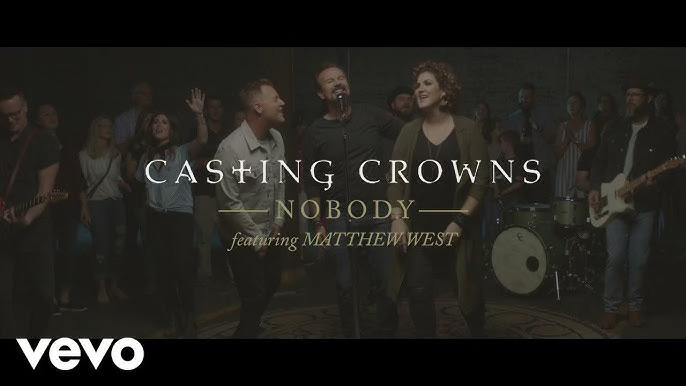
“Nobody” — Casting Crowns
“Why” — Elevation Worship
“Good Good Father” — Chris Tomlin
“Who You Say I Am” — Hillsong
“Reckless Love” — Cory Asbury
“You Say” — Lauren Daigle
Each one is sincere. Each one has comforted millions. And each one—without intending harm—can quietly reveal how modern worship often slides from Scripture’s covenantal worldview into something more individualistic, more therapeutic, and (often by omission, not argument) more supersessionist in effect.
Not malicious. Not calculated. Just disconnected from the story God actually wrote.
Let’s look gently, honestly, and with covenant loyalty—brit (בְּרִית means covenant, pact, or agreement) loyalty.
Worship is catechesis with a melody
The apostles expected songs to teach. Paul says we “teach and admonish” one another with psalms, hymns, and spiritual songs (Colossians 3:16). Worship is not merely emotional release. It’s formative speech. It trains the mind to default a certain way.
So when worship language subtly shifts—especially around identity words like chosen, loved, called, redeemed—it matters. Because those are covenant words first.
They have a history. A lineage. A people. A promise.
The soft shift from covenant story to self-focused faith
Listen to these lines:
“Why You ever chose me has always been a mystery.”
— Nobody
“Why You love me like You love me, I’ll never know.”
— Why
At first, they sound humble. But humility without covenant context quietly becomes confusion—because biblically, God’s choosing is not random, and His love is not a floating mystery.
The Torah is explicit:
“It was not because you were many… but because Adonai loved you and kept the oath He swore to your fathers.”
— Deuteronomy 7:7–8
In Scripture, “chosen” is tethered to the oath—to Abraham, Isaac, Jacob. Election is covenant fidelity. God binds Himself by promise. He chooses a people, not because they are impressive, but because He is faithful.
Now here’s the subtle pivot: modern worship often detaches “chosen” from Israel’s story and reattaches it directly to the individual self:
Why did You pick me?
Why do You love me?
Why do You pursue me?
The shift is soft, but it’s real. Identity moves from covenant history to personal introspection—and the theology moves with it.
A pattern hidden in plain sight
Consider how many modern worship anthems build identity almost entirely inside the inner world:
“I’m loved by You… it’s who I am.” (Good Good Father)
“I am chosen, not forsaken…” (Who You Say I Am)
God’s pursuit framed chiefly as emotional intensity (Reckless Love)
Identity grounded in what God “says” about me internally (You Say)
Let me be clear: comfort isn’t the problem. Healing isn’t the problem. Scripture comforts. Scripture heals.
The problem is what happens when covenant context disappears.
When identity language is stripped of Israel’s story, covenant becomes therapy. The patriarchs fade. The Exodus fades. The prophets fade. The “new covenant” becomes “my inner reassurance,” instead of Jeremiah’s promise to the house of Israel and the house of Judah (Jeremiah 31:31).
And without anyone standing up to argue replacement theology, something even quieter happens:
Israel becomes invisible, and the church becomes “the people of God” by default—by silence, not by Scripture.
That’s supersessionism by erosion, not by sermon.
The psychological engine underneath modern worship
This is the part many believers feel but can’t name.
Modern worship is often written inside a therapeutic psychological framework. It treats faith primarily as:
emotional reassurance
self-worth repair
inner healing
validation of the individual soul
So the worship questions become:
Am I loved?
Am I worthy?
Does God see me?
Those are human questions—and sometimes necessary ones. But they’re also very modern questions, shaped by an age that treats the self as the center of meaning.
When that psychological frame becomes primary, biblical words get redefined:
“Chosen” becomes a personal compliment
“Loved” becomes a mood stabilizer
“Grace” becomes sentimental permission
“Identity” becomes self-talk with Bible vocabulary
And suddenly:
Abraham disappears
Sinai disappears
Israel disappears
covenant disappears
and we can sing “I am chosen” a thousand times without ever asking:
Chosen in whom?
Chosen through which covenant?
Chosen for what mission?
Chosen as grafted branches—or as a new, separate people?
Romans 11 doesn’t give us a free-floating chosenness. It gives us an olive tree. It gives us roots. It gives us humility. Gentiles don’t replace the tree. They’re grafted in—by mercy—into something older than them, holier than their self-story.
Why this matters, and why we speak gently
This isn’t written to scold worship leaders. Most are writing within the theology they inherited—the only theology many have ever been given. They’re trying to help people survive.
But survival isn’t the same as formation.
When Israel is removed, replacement theology seeps in.
When covenant disappears, identity becomes emotional.
When psychology leads, Scripture becomes decorative.
And when chosenness is detached from Abraham, it becomes self-focused—experienced as a feeling instead of received as a calling.
Music doesn’t merely reflect theology.
It forms it.
So if the songs are thin on covenant, the faith becomes thin on covenant.
A better way: worship rooted in the story God actually wrote
Imagine singing the same themes—love, election, identity, rescue—but through the brit lens.
Suddenly:
Chosen isn’t about my worth.
Loved isn’t a mystery floating in the air.
Pursued isn’t emotional intensity—it’s covenant mercy.
Identity isn’t inner validation—it’s a shared story and a shared mission.
The God of Israel keeps His promise.
Through Messiah.
For Israel and the nations.
In one covenant family—not two, and not one replacing the other.
This doesn’t diminish worship. It deepens it. It doesn’t silence songs. It restores meaning. Because when we return to covenant, everything gets clearer:
Belonging. Purpose. Obedience. Mercy. Discipleship. Worship.
You don’t become smaller when you’re grafted into Israel’s story—you become anchored.
A simple practice for the worshipper and the worship leader
If you want a practical “teshuvah” here—a return—try this:
When a lyric says “chosen,” whisper the roots: Abraham.
When it says “redeemed,” remember Exodus.
When it says “new covenant,” hear Jeremiah 31 and Ezekiel 36—heart obedience, not spiritual amnesia.
When it says “I am,” add “in Messiah”—and then ask, “for what mission?”
And if you write songs: don’t stop writing comfort. Just stop writing comfort that forgets the covenant.
Let the music carry the whole story.
Closing blessing
Beloved, none of this is written to condemn worship.
It’s written to reopen the eyes of a generation that inherited a thin gospel, a church-centered worldview, and an Israel-less theology—without ever realizing what was missing.
When covenant returns to its rightful place, your faith becomes stronger—not smaller.
Truer—not harsher.
Deeper—not heavier.
And your worship becomes rooted in the God who keeps covenant… even when we forget the storyline.
May the shalom of our Abba guard you —
shalom v’shalvah.
Your brother in The Way,
Sergio.
You hit a hot button here. My former pastor probably still remembers our conversation about "Reckless Love".
There are many songs that are thoughtful, uplifting, and enjoyable to listen to, but are they really worship songs? Let's be honest...what passes as worship music today are songs created for consumption. They're designed to stir passions and emotions. Too many of them romanticize the gospel in ways that shift the focus away from God and indulge the flesh. Don't get me wrong, I listen to a lot of contemporary Christian music, but only 10% qualifies as "worship" music.
I totally understand your point in this article. It doesn't want possible to fully understand our salvation without understanding the roots, the foundation, that it's built on.
What I think you might be missing here is that not all CCM is written to, or from the viewpoint of, people who have this level of understanding.
Songs like the ones you reference are written from the viewpoint of people who don't yet understand the deeper things of their faith. I've done terrible things in my life and as a new believer I really wondered " out of all the people You could reach out to and bring out from that mirey clay, why me?"
So many times I've thought the words of these songs about myself, "You think I'm worthy of Your Grace when I think I'm awful.". "You've saved me from myself so many times, even up to commiting suicide.". Things that I cannot wrap my head around. Things that no man would ever do for me.
It's so huge and amazing and all these songwriters are trying to express that awe and bewilderment of the newly saved coming to terms with what that means.
It isn't covanental, it's messy and sometimes not exact, but it expresses the emotions and rawness of salvation in a way that many can personally understand.