

Baptism Didn’t Save You. It Drafted You.
Recovering a Biblical Practice the Church Turned into a System

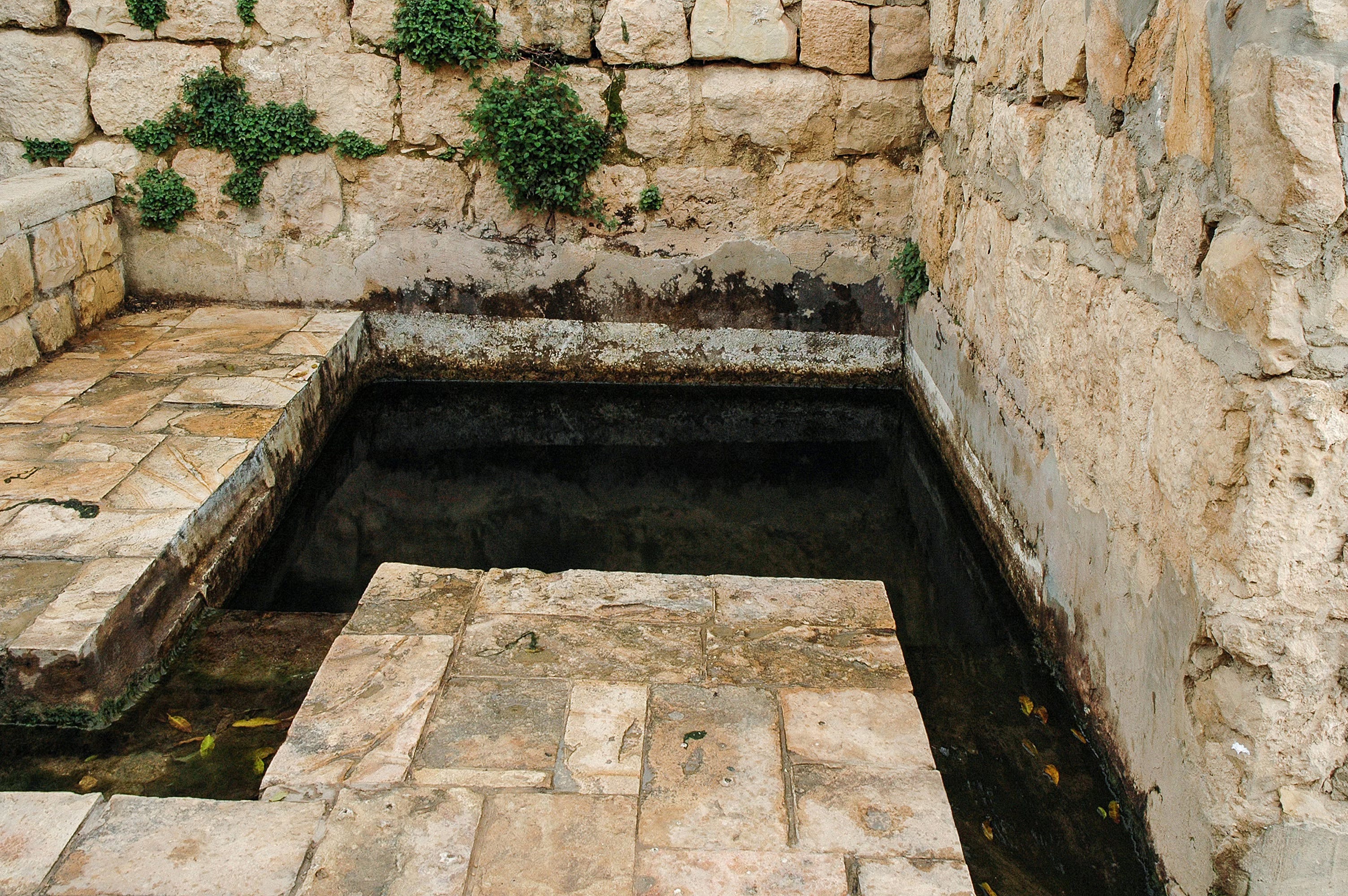
Baptism Didn’t Save You. It Drafted You.
Before we argue about baptism, we need to define what the Bible is actually talking about.
In the Hebrew world, “baptism” isn’t a church ritual. It’s immersion—mikveh—a humble, physical act of washing that symbolized a deeper reality: I’m turning back. I’m laying down defilement. I’m readying myself to re-enter covenant life. It was used for ritual cleansing in Torah, yes—but more importantly, it functioned as a threshold act: a person publicly acknowledging, “I’m not staying where I was. I’m preparing to obey.”
Immersion made repentance visible.
It was the body agreeing with the heart.
That matters, because Scripture never treats water as the source of forgiveness. It treats repentance (teshuvah) and trust (emunah) as the hinge. Immersion follows as an embodied confession of that inner turning.
So immersion, biblically speaking, is not a magical mechanism that erases guilt. It is a posture made visible—humility, repentance, and readiness. A way of saying with your body what your mouth is claiming with your words:
“I’m coming clean. I’m returning. I’m stepping forward.”
That is why immersion carried weight in the first century. It wasn’t spiritual theater. It was covenant seriousness.
And that’s also why it has been so easy for institutions to hijack it.
Baptism Did Not Begin with Christianity
Any serious discussion must begin before the New Testament.
Ritual immersion (mikveh) was already embedded in Jewish life centuries before Yeshua. Archaeology confirms it. The Gospels assume it. No one in the first century asked what immersion was. What demanded explanation was why John was calling Israel to it.
Mikveh marked readiness, consecration, and alignment. It prepared people to move from one state of obligation into another. What it never did—according to Torah—was automatically cleanse moral rebellion.
Scripture is consistent and unflinching here:
Ritual impurity is addressed with washing.
Covenant rebellion is addressed with repentance, obedience, and mercy.
The prophets dismantle ritual confidence precisely because Israel tried to substitute ceremony for loyalty. “Wash yourselves, make yourselves clean” is never about water alone. It is about turning, repairing, and returning. The water without the turning is meaningless.
Mikveh as Preparation, Not Erasure
One of the most overlooked patterns in Scripture is when immersion appears.
Israel washes before Sinai.
They consecrate themselves before crossing the Jordan.
Soldiers maintain ritual readiness before battle.
Immersion prepares for engagement. It does not erase consequences.
Mikveh is not a spiritual eraser.
It is a mobilization act.
That frame explains why immersion mattered so deeply in the first century. It was a public declaration that neutrality was over. Once you entered the water, you were accountable.
Yeshua’s Baptism as Interpretive Anchor
Yeshua’s immersion clarifies everything—if we let it.
John protests because the categories don’t fit. Yeshua has no moral impurity. Yet He insists. Not to be cleansed, but to identify publicly with the Father’s will and inaugurate His mission.
Immediately after immersion, Yeshua is driven into testing and confrontation. Baptism does not shield Him from hardship. It marks the beginning of it.
Yeshua is not saved by baptism.
He is commissioned by it.
Apostolic Theology and the Order of Salvation
The apostles reinforce this framework.
Paul centers covenant standing on faith. Abraham is the prototype. Righteousness is counted before signs. Signs follow realities. They do not create them.
Acts 10 is decisive: Cornelius receives the Spirit before immersion. Baptism responds to God’s action; it does not trigger it.
Paul’s statement in 1 Corinthians 1:17 only makes sense if baptism is commanded and important—yet not the mechanism of salvation.
The Thief on the Cross: What Actually Happened There
The thief beside Yeshua is often invoked casually, but he deserves careful attention—because he does not represent a loophole. He represents clarity.
Look closely at the scene (Luke 23:39–43).
This man does not merely “ask Jesus in his heart.”
He undergoes a full covenantal turning—publicly, verbally, and decisively.
First, he fears God:
“Do you not fear God, since you are under the same sentence?”
This is not emotional regret. This is reverence. The beginning of wisdom.
Second, he confesses guilt without self-defense:
“We are receiving the due reward of our deeds.”
No blame-shifting. No victim narrative. No comparison. Just ownership.
Third, he acknowledges Yeshua’s innocence and kingship:
“This man has done nothing wrong… remember me when you come into your kingdom.”
That is not vague belief. That is allegiance.
This is repentance in its rawest, purest form.
And notice where it happens.
His repentance does not occur after death.
It does not occur in some theoretical faith moment.
It occurs on the cross—at the point where his former life is already dead.
In other words, his turning had already happened.
The cross becomes his threshold.
The moment of surrender becomes his immersion.
The thief does not bypass repentance. He completes it.
He does not escape obedience. He dies to his former self.
And that is why Yeshua can promise him life without hesitation.
The thief proves something crucial: God responds to genuine repentance wherever it occurs. Baptism is commanded when life continues. But when life is ending, God is not bound to the sign.
The thief doesn’t weaken baptism.
He exposes the idea that baptism replaces the heart.
Nicaea and the Institutional Shift
How Men’s Doctrines Turned a Covenant Sign into a Controlled System
The rupture does not come from the text. It comes from history—specifically the moment the faith was absorbed into machinery.
Nicaea (AD 325) is often discussed like it was merely a theological housekeeping meeting. It wasn’t. It marked the acceleration of a larger change: Christianity moved from a persecuted, covenant-shaped movement into an imperially managed institution. And once faith becomes institution, it must become administrable. Systems cannot thrive on invisible realities like repentance, obedience, and fruit. Systems require measurable gates.
They require:
membership criteria
authorized administrators
standardized language
enforceable boundaries
mechanisms of inclusion/exclusion
And that is where men’s doctrines flourish. Not necessarily because leaders are evil, but because institutions are allergic to spiritual ambiguity. They prefer control to discernment, procedures to fruit, and rituals to slow, relational covenant life.
Nicaea did not “create baptism,” but it changed what baptism was used for. The rite slowly shifted from a public declaration of allegiance to Messiah into an institutional instrument of belonging.
In plain terms:
baptism became a lever of jurisdiction.
Once Christianity became culturally normal—and then politically favored—the meaning of baptism drifted:
From repentance and readiness → to enrollment and legitimacy
From allegiance to the King → to submission to the church structure
From a sign of covenant turning → to a sacramental mechanism
This is where the logic of men’s systems takes over:
if baptism is salvific, then the institution that controls baptism controls salvation.
That is the core temptation.
And it explains why so many later developments “make sense” structurally even when they don’t make sense biblically.
The Post-Nicene Cascade: Extra-Biblical Authorities That Shaped Christianity
If you want to understand why “Christianity today” often feels foreign to Scripture, you have to trace the layers of authority that were added over time. Here are some of the major shaping forces:
Imperial Christianity (4th century onward)
Once the faith became intertwined with empire, church identity and civic identity began to merge. Baptism became a social marker, not merely a discipleship marker. A rite that once carried costly consequence now carried cultural advantage.
The Rise of Creeds and Conciliar Enforcement
Creeds can clarify truth, but councils also created an apparatus where the institution increasingly functioned as the final arbiter. Over time, “orthodoxy” became as much about submission to the defined system as fidelity to Scripture’s total witness.
Augustine and the Intensification of Sacramental Thinking (late 4th–5th century)
Augustine’s influence on Western Christianity is difficult to overstate. His formulations around original sin and sacramental grace helped cement the logic that baptism does something salvific by the act itself—fueling infant baptism and sacramental certainty.
The Medieval Church and the Sacramental Economy
By the Middle Ages, sacramental theology matured into a full system: grace was increasingly conceptualized as something dispensed through institutional channels. Baptism naturally sat at the front gate of that structure.
The Papacy and Centralized Authority
As ecclesial authority centralized, the gates tightened. The question shifted from “Have you repented and trusted the King?” to “Are you in good standing with the authorized structure?”
The Reformation (16th century): Partial Reset, New Systems
The Reformers challenged Rome’s abuses and restored critical truths—yet Protestantism also generated its own confessions, boundary lines, and denominational baptisms. In many places, baptism remained a tribal marker: “our baptism vs theirs,” “valid vs invalid,” “rebaptize or not.”
Modern Denominationalism and Identity Baptisms
Today, many traditions still use baptism to certify identity: a label, a loyalty marker, a social belonging mechanism. That is the institutional impulse wearing a biblical word.
And through all of this, the warning of Yeshua becomes painfully relevant:
men can nullify the word of God through tradition, even while speaking God’s name.
The tragedy is not that councils existed. The tragedy is that systems grew confident enough to treat Scripture as raw material rather than final authority.
So baptism became a gate. Gates require guardians.
And guardians require power.
That is the institutional drift.
What Baptism Actually Does
Baptism does not replace repentance.
It records it.
It does not save.
It enlists.
It is the body saying what the heart has already decided.
That is why baptism belongs before obedience-heavy living, not after it. And that is why a baptized life devoid of repentance, transformation, or covenant loyalty is not protected—it is contradictory.
The most dangerous misconception is not that baptism saves.
It is that baptism excuses.
A baptized heart that refuses obedience is not secure.
An unbaptized heart that has genuinely turned to God is not rejected.
Baptism does not bind God.
It binds the one who enters the water.
And when we recover that frame, baptism becomes weighty again—not as a ritual of reassurance, but as a declaration of readiness.
Not “I’m safe now.”
But “I’m accountable now.”
That is a baptism worth recovering.
May the shalom of our Abba guard you —
shalom v’shalvah.
Your brother in the Way,
Sergio
© Sergio DeSoto /sergiodesoto.com. All rights reserved.
This is original, protected work. Pastors and teachers: please do not lift or republish this content as your own. If you share or preach from it, simply credit the source and author. Integrity begins in the pulpit.
Wow, what you said about the thief on the cross deserves its own article. I have never heard it taught that way before.
You have described some of what went on with my baptism. I gave myself to Jesus and accepted my death. My infant baptism was of unclear worth. So I was immersed about ten years after I was born from above, filled with, and empowered by the Spirit. It was a religious event that enabled me to teach and minister in evangelical and pentecostal churches.
It was a visible statement about the death of my old man which I had already accepted by faith. I think what I am saying is that we all have a uniquely personal path through to our final salvation and the receipt of our glorified body.
God said to us personally to get immersed, so that's what my wife and I did—a decade or more after we were transformed by our relationship with Yeshua Messiah. Our faith said that if Jesus did it, we needed to as well.
As always, the institution is a problem. Jesus works with organisms, not organizations.