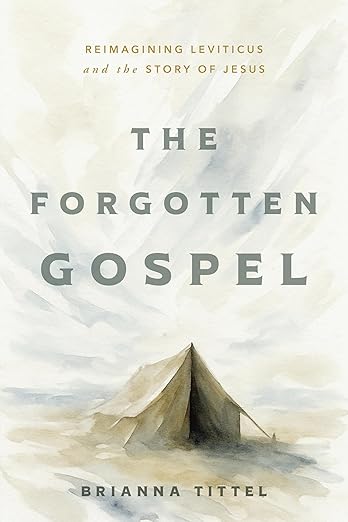


I don't think of myself as a rebel.
I was the good Christian girl who grew into a good Christian woman. I read my Bible, showed up to church, prayed, loved my family, and built a life that fit faithfully inside the lines I had been given. My faith and love for the Lord were sincere. And for a long time, that was enough.
Until it wasn't.
During a stormy season, I opened my Bible looking for help—clarity, relief, some way to make sense of a life that didn't line up with what I thought faith was supposed to produce. Instead, I found myself staring at a passage where Jesus claimed that all of Scripture—the Torah and the Prophets—was pointing to him.
I had read those Scriptures my entire life, and I couldn't see it. It occurred to me that Jesus was having a very different experience with his Bible than I was having with mine. A thought surfaced, intrusive and clear: Maybe I'm reading this wrong?
So I went back in. I re-read the entire thing.
The Bible Isn't About Me
Instead of reading the Bible as a way to solve my problems or teach me how to live a good life, I tried to read it the way Jesus described it: as a story about a Messiah.
That was hard. I hadn't been taught to read the Bible that way. Truthfully, I didn't even really know what a Messiah was. For most of my life, I had read Scripture as a story about me and God—my sin, my need for forgiveness, and God's willingness to meet me in all of it and secure my spot in heaven. The Bible functioned as a kind of spiritual survival guide, full of moral lessons and theological definitions, and the gospel was the pivotal point that made it all work.
But the more I fumbled my way through this new approach, the less that framework held up. Nothing in the Bible was about me.
Slowly, I found my way into a story about God, his purposes for the world, how he accomplishes them through a particular family and people, and how those purposes unfold through a Messiah leading those people in a particular place.
Israel and the Jewish people weren't a side note. They weren't characters in moral lessons or a backdrop for Sunday school stories. They weren't relics of a bygone age, cast aside at the cross to make way for new religion.
They were on every page.
Promises and blessings, failures and prophecies, commands and rituals—these were the people and the land that Jesus came to, and they remained central even after his ascension. His first followers didn't move beyond that story. They lived it and carried it forward.
That realization didn't come all at once. I spent years reading and re-reading, sitting inside questions I couldn't answer, and dismantling theological frameworks I didn't even know I had. Again and again, the text pulled me back to the same place: a people, a land, and a set of promises that had not been replaced, reassigned, or spiritualized into something else.
Somewhere within that story, there was a place for me—but it wasn't about me.
The version of the gospel I inherited centered on the individual: personal salvation, a place in heaven, building a good life with God's help. It wasn't all wrong. But when I held that version up against the text—and asked what the biblical authors thought they were saying—my theology unraveled.
What I had called the gospel was so different than the story Scripture was telling.
A Different Gospel
Over time, Paul's warning to the Galatians began to haunt me:
I am astonished that you are so quickly deserting the one who called you… and are turning to a different gospel.
Having grown up in mostly Reformed, evangelical circles, I had always heard his words as a warning against legalism—trying to earn salvation through effort. When I went back to Acts, however, and re-read what actually happened in Galatia, I realized that's not what Paul was addressing at all.
The Galatians were not asking how to earn salvation. That was never the debate. They were asking whether Gentiles needed to become Jewish in order to belong to the covenant people of God. Paul's answer was charged and emphatic: no.
God had made a promise to Abraham that the nations would be brought into his family, and for Paul, that meant Gentiles from among the nations remained Gentiles from among the nations. Jesus didn't come to replace that promise or revise those roles. He came to bring them to their fullness and lead humanity into unity within those distinctions.
Paul wasn't guarding a Reformed conversation about faith versus works. He was preserving a story—and defending the faithfulness of a God who keeps his promises.
In Paul's mind, the gospel was about the God of Israel, a redemption rooted in Israel, now unfolding toward the nations, not by erasing Israel, but by fulfilling what had always been promised through her. Anything that distorted that story—by adding to it or rewriting it—Paul called a different gospel. (And then he cursed it!)
And I realized, I had never heard that gospel.
I had only ever heard a message that placed me and my salvation at the center, and abandoned the story and people Jesus laid down his life for.
Like Paul, I was astonished. Because like the Galatians, I had fallen for a different gospel.
When the Story Closed In
By the time I realized this, I had begun to see the gospel entirely differently. What Jesus, the prophets, and the apostles preached is a continuing trajectory—a story moving somewhere specific, unflinchingly centered on God's promises to Israel and what he intends to do for the world through them.
Then October 7th happened.
Suddenly, a message I had been slowly recovering for years was no longer theoretical. It was real—on my phone, in the headlines, in the faces of Jewish children, and in the questions people began bringing to me when they didn't know where else to turn.
That day forced into focus a truth I had been circling for years: my generation of Christianity does not understand the story it claims to affirm—not in the way Scripture tells it, not in the way that holds together Israel, God's promises, and the trajectory of messianic redemption.
In the months that followed, the deafening silence from Christian leadership bothered me deeply. Leaders hesitated to speak plainly about the suffering of the Jewish people, failed to anchor that suffering within the story Scripture tells, and at times, a shrank back from the responsibility that story demands. I didn't expect perfection from the church, but October 7th exposed a chasm in the moral and spiritual foundation of believers. When the foundation is off, everything begins to crumble. I could no longer participate in handling Scripture—or the gospel—that way.
What settled on my heart during that time was both heavy and exhilarating: a responsibility to contend for a story I believe the church can no longer afford to misunderstand and to invite others into recovering a gospel we have too long ignored.
The Cost
That message comes with a cost.
It doesn't fit neatly inside familiar Christian interpretations or structures. It requires letting go of assumptions I once trusted and standing in places that used to feel like home, only to realize I no longer fit there in the same way.
Most of that cost has been relational. I've been misunderstood by people I continue to love and respect. The tension isn't because of my behavior, my intentions, or even my posture. It's because of the gospel.
While I remain deeply grateful for the evangelical message that first brought me to faith, it's not one I continue to preach. I have fallen for a different gospel—the one preached to Abraham, an ancient promise Jesus came to begin and will soon bring to completion.
In some eyes, that makes me a rebel. Not because I am rebellious, but because the gospel is. I wish it were not the case, but this message has affected how I am seen and where I belong within the church. Still, I will not be ashamed of it. Today I write as someone who genuinely loves the church, yet is deeply troubled by the direction much of it has taken, and by the role it has played in the broader reckoning American Christianity now finds itself facing.
I stand on what often feels like the frontier of real faith, refusing to throw stones, yet honestly carrying forward the call to repentance that Jesus and John the Immerser proclaimed in the wilderness. The church must recalibrate towards that good news if we are to stand faithfully in the days ahead.
Opening Our Eyes Again
We don't fall for a different gospel all at once. We drift into others versions of it, ones easier to explain, more comfortable to live with, ones centered on us, but dangerously untethered from the story our Lord gave his life to fulfill.
And when that happens, I'm afraid we lose more than doctrine and theology. We lose our place in the story itself.
The question that keeps me awake at night is not whether I believe the good news, but whether I am strong enough to live it? Am I willing to hold what I have been told in one hand, and the testimony of Scripture in the other—and see, with trembling honesty, where they no longer fit together?
Our Lord came announcing a gospel of repentance—to turn, to leave behind what we have grown comfortable in, and to take up our cross and follow a Jewish rabbi through the wilderness and into the age to come. It is a path on a frontier that often leads us outside the camp, beyond the safety of what we've always known, toward the light breaking on that eastern horizon.
Are we willing to go there—to commit our lives to falling for a different gospel?