

Gnats, Frogs, Camels—Oh My!
Days before his death, Jesus pronounced woe upon the religious leaders of his generation:
"Woe to you, scribes and Pharisees, hypocrites! For you tithe mint and dill and cumin, and have neglected the weightier matters of the
: justice and mercy and faithfulness...You blind guides, straining out a gnat and swallowing a camel!" (Matthew 23:23–24)
Years later, John of Patmos would describe another unclean creature appearing before the Day of the Lord: the frog, coming from the mouth of a false prophet. (Revelation 16:13–14)
Gnats. Frogs. Camels.
Unclean things have a way of deceiving and defiling God's people. Some buzz around our ears demanding attention. Others leap around, spreading lies wherever they go. But sometimes a massive beast strolls right into the middle of the camp, and no one seems to notice.
Over the past week, several stories have caught my eye.
What fascinates me is the disproportionate amount of attention these items receive in the church. Like perpetual gnats, certain controversies buzz constantly within Christianity. Like frogs, opinions leap from one conference to another, consuming our energy and dominating our conversations, convincing us these are the most important issues our churches face.
But with all the gnats buzzing and all the frogs leaping, I believe we have, tragically, overlooked the camel.
The Camel in the Sanctuary
If you had asked me a few years ago whether Christians on a whole were antisemitic, I would have answered with a quick and confident no. Today, I am no longer quite so quick or confident.
Most Christians know antisemitism is evil. Faithful believers would never dream of hating Jewish people, and most would be offended at the mere suggestion. Yet I have become increasingly reluctant to defend the church from the charge altogether because I have noticed a different expression of Jew-hostility raging right inside it.
Many Christians who appear to have no problem with Jewish people are deeply suspicious of Jewish things.
The moment something is labeled Jewish, many believers instinctively reach for the brakes. A Jewish interpretation of Scripture? Suspicious. A Jewish practice in a church? Proceed with caution. A Jewish understanding of the kingdom of God? The Messiah? The New Testament? Better run it through a Christian filter first.
The specifics and vocabulary vary, but the pattern remains consistent. The more Jewish something appears, the more likely Christians are to view it with suspicion.
That should alarm us. Hostility toward Jewish people is not the only way Jew-hate manifests itself.
Sometimes it appears in a far more respectable form, sitting comfortably in church pews, mesmerizing us from the pulpits on our stages and lecterns in our classrooms. It publishes sophisticated books and records engaging podcasts that sound Jesus-centered. It speaks fluent Christian vernacular and regularly quotes Bible verses. And it's very good at assuring believers that they are honoring Jesus while teaching them to distrust anything and everything from the texts, traditions, people, and world from which Jesus emerged.
We may wonder, how did generations of Christians become so wary of Jewish things while simultaneously believing they were honoring a Jewish Messiah?
The answer, I believe, is that a camel has been sitting in the sanctuary for a very long time.
While Christians continue debating questions that rest on a handful of disputed texts, few seem willing to confront the theological framework that has shaped how much of the church reads the entire Bible. And that framework has been doing far more damage than all the gnats and frogs combined.
The Platform Beneath the Camel
The theological term for this camel is supersessionism.
Supersessionism is often reduced to mean that the church has replaced Israel. Many Christians reject that quickly, but I believe that is far too narrow of a definition.
At its core, supersessionism is the belief that Christianity supersedes Judaism—that Christian beliefs and teachings replace Jewish ones. Once that assumption is accepted, replacement theology spreads quickly through nearly every corner of Scripture and faith-practice.
Notice the pattern. Concrete Jewish expectations become spiritual, Christian truths. What God promised to do in history becomes something he is presumed to have fulfilled symbolically through Christ.
Whether Christians recognize it or not, many of us practice this hermeneutic every day. We quote the prophets' promises and apply them to ourselves. We print them on coffee mugs, write them in journals, and preach them as take-away points.
Yet when those same prophets speak of Israel's restoration, her land, kingdom, Messiah, or Torah instruction flowing to the nations, suddenly we become experts in symbolism. God's positive promises are universalized, but his warnings remain stubbornly aimed at the Jew. It is an astonishingly inconsistent way to read Scripture. More importantly, it has trained generations of Christians to view Jewish expectations as inferior versions of misunderstood truths rather than as the hope the biblical authors proclaimed.
Replacement theology is not merely a theological debate, but a respectable false prophet in the church—a camel sitting in the sanctuary. Christians have grown so accustomed to its presence, most no longer notice it at all.
The Camel Breeds Anti-Judaism
There are different expressions of hostility towards Jews and Jewish things. The church confuses them, straining out one while swallowing another.
The form of hostility that concerns me most, however, is anti-Judaism.
Unlike its cousins, anti-Judaism rarely announces itself. It does not march down crowded streets or shout slurs. It does not usually hate Jews. That is precisely what makes it dangerous.
Anti-Judaism often disguises itself as Christian orthodoxy. It fools sincere believers into thinking they are honoring Jesus while teaching them to distrust the texts, practices, and interpretations Jesus embraced.
Anti-Judaism says...
In anti-Judaism, the Jew may be welcomed, Israel may be admired, the Old Testament may be respected. But Jewishness is not.
Anti-Judaism is where the camel of replacement theology leads.
The Deception Facing the American Church
I find this camel so troubling because it deceives Christians about what matters most.
Jesus said remarkably little about many of the issues that dominate modern Christian discourse. He said nothing that prohibited women from leadership positions within the messianic community he left behind. He certainly did not spend his ministry debating whether future Christian interpretations of Scripture should replace Jewish ones. The apostles did not spend their time defending Christianity against Judaism, nor were they trying to persuade anyone to abandon Jewish identity or practice in order to follow Israel's Messiah.
What occupied their attention instead were themes much of the modern church has little interest in: the restoration of Israel, the coming kingdom, the ingathering of Jewish exiles, the repentance of the nations, the judgment of the world, and the renewal of creation under Israel's Messiah. These topics saturate the Old Testament. They dominate the preaching of John the Baptist, stand behind Jesus' announcement that the kingdom of heaven was at hand, fill the disciples' questions, and remain the urgent expectation of the apostles.
Yet the church often treats these subjects as curiosities—interesting but secondary. Instead, we devote enormous amounts of time to debates built upon a handful of verses while neglecting themes that appear thousands of times throughout Scripture.
"You neglect the weightier matters of the Torah...You strain out the gnat but leave the camel!"
The American church appears largely unbothered by the magnificent unclean beast that has wandered into our sanctuaries, stinking up our understanding of Israel and blocking our vision of our Messiah's kingdom, land, and people.
Perhaps those are the conversations demanding our attention. Perhaps that is the weightier matter.
Following the Rabbi
Long ago, a crafty beast of the field snuck his way in asking, "Has God really said?" The question has echoed through the human imagination ever since.
- "Has God really chosen the Jews?" asks antisemitism.
- "Has God really set apart the land of Israel?" asks anti-Zionism.
- "Has God really instructed all these things?" asks anti-Judaism.
- The forms and voices change. The pattern doesn't.
- Attack the Jewish people.
- Question the legitimacy of the land.
Teach people to distrust the Jewishness of Scripture, remains of a failed faith rather than the fabric of God's redemptive plan—a fabric Gentile believers entered the moment they pledged their allegiance to Jesus.
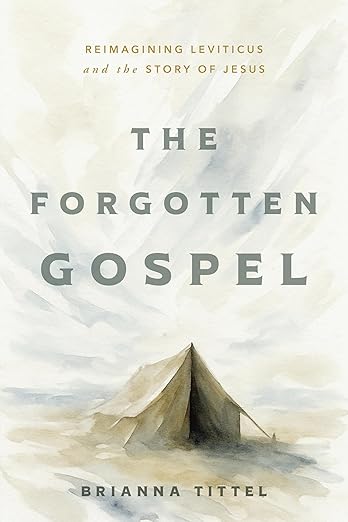
I am a disciple of a Jewish rabbi from Nazareth. I believe Jesus is Israel's Messiah, David's Son, and the King of the Jews. Because of that, I defend the Scriptures he taught, the people and land he loves, and the kingdom promised by the prophets that he proclaimed. And I believe he is returning to those people and land to complete everything Israel's Scriptures teach.
Because I follow a Jewish Messiah, I cannot afford to become suspicious of Jewish things.
I do not idolize Judaism, accept every rabbinic tradition, abandon every Christian one, or throw critical thinking and discernment out the window. The antidote to supersessionism is not converting to Judaism, but knowing and honoring the God of the Jews, who remains faithful to what he said.
I pray, earnestly, that the American church will repent. I pray for eyes to be opened and hearts to be soft. But I fear the woe awaiting us if we continue straining the gnats and chasing the frogs.
I believe we ought to start in the sanctuary, and get to work shooing out the camel.